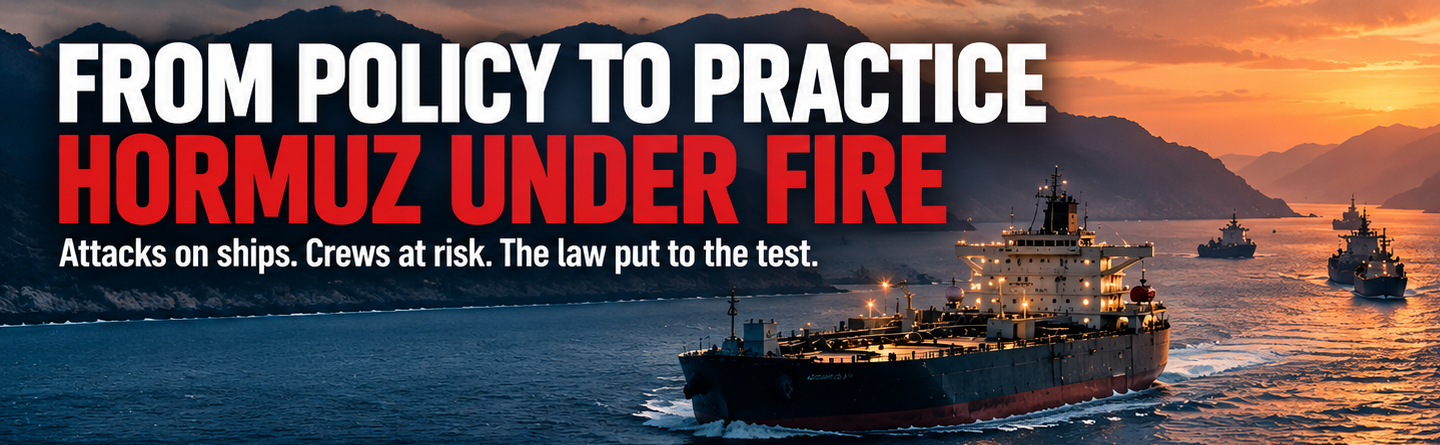
The U.S. military has abandoned the megaphone and instead, picked up a phone. Here’s what the new, “low-profile approach” to protecting commercial vessels in the Strait of Hormuz means for shipowners, crews, and the global energy market.
About a month ago, President Trump unveiled “Project Freedom,” a high-profile initiative to escort commercial vessels through the Strait of Hormuz with U.S. Navy ships as escorts. The announcement’s reception was not subtle, provoking immediate Iranian counterattacks and threatening to collapse a fragile ceasefire. The administration scrapped that plan within days, reportedly after pressure from regional allies. Since then, the conversation has gone quiet, but the work, it turns out, has not.
WHAT’S ACTUALLY HAPPENING
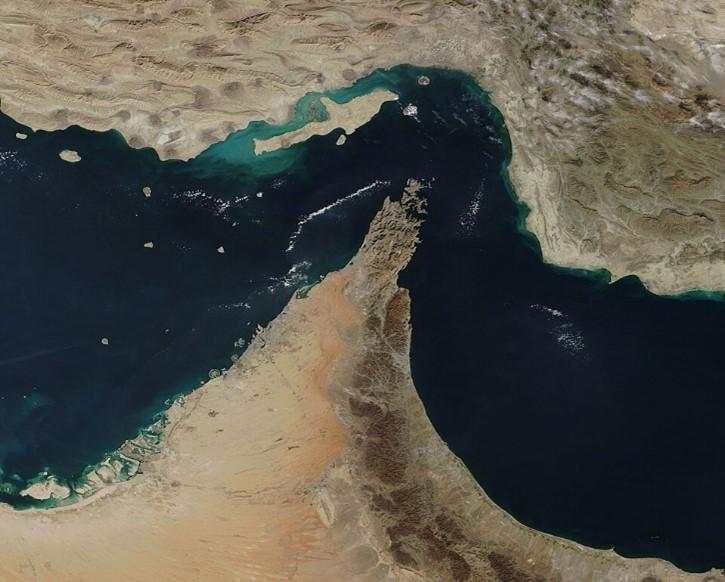
Rather than formal escorts, U.S. Central Command has shifted to a more discreet mode of operation. According to Bloomberg reporting and statements from CENTCOM itself, the military is now coordinating directly with willing commercial operators on how best to navigate the waterway—advising on routing, timing, and the practical tradecraft of getting through.
The approach that has emerged from this coordination is telling. Vessels hugging the Omani coast on the strait’s southern edge (as far as possible from Iranian-controlled waters) and going “dark” by switching off their Automatic Identification System (AIS) transponders. In ordinary times, AIS is a cornerstone of modern navigation safety and collision avoidance; vessels are generally required by international convention to keep it running. But in an active conflict zone, where your transponder signal can help an enemy direct a drone strike, all bets may be off.
As Bryan Clark of the Hudson Institute explained, running without AIS forces Iranian forces to rely on radar or spotters to detect movement—a harder problem to address. Meanwhile, U.S. Navy assets, including destroyers and E-2D early-warning aircraft equipped with AEGIS command-and-control systems, can maintain their own picture of the strait and provide what Steven Wills of the Navy League’s Center for Maritime Strategy calls “a kind of distant but direct coverage.”
CENTCOM initially denied any escort activity. But, after more evidence emerged—ship-tracking data, firsthand accounts, the plain fact that vessels were getting through—the command updated its messaging. “Though US forces are not escorting, we continue to communicate and coordinate with commercial ships seeking to freely and safely transit the Strait of Hormuz,” Navy Captain Tim Hawkins confirmed. Defense Secretary Pete Hegseth offered a more candid summary over the weekend, alluding to U.S. efforts “whether known or unknown” in the strait.
THE MINE PROBLEM
The routing strategy exists is complicated largely because of mines. Iran is reported to have deployed roughly a dozen mines in the strait since the conflict began in late February, and at least two recent warnings have been issued—one from Oman’s own Maritime Security Centre—about floating objects suspected to be naval mines in or near the strait’s inbound traffic lane. That lane sits partly within Omani territorial waters, which adds a layer of diplomatic and jurisdictional complexity to the mine-clearance effort.
Mines are not a novel weapon, but they remain perversely effective precisely because of their simplicity and prevalence. They do not know (or care!) if your flag, your cargo, or your paperwork is in order. The types of mines believed to be deployed include:
- bottom mines keyed to a vessel’s magnetic or pressure signature,
- tethered mines anchored just below the surface,
- drifters that move with the current, and
- limpet mines designed to be attached directly to a hull.
Each type of mine requires a different detection and neutralization strategy.
The U.S. Navy has Avenger-class minesweepers in theater, along with Littoral Combat Ships, which carry the latest mine-countermeasure (MCM) packages, unmanned underwater vehicles, and helicopters. Active clearance operations have been underway since March. But clearance is methodical work: detection, data analysis, identification, neutralization. It cannot be rushed without risking the lives of the people doing it.
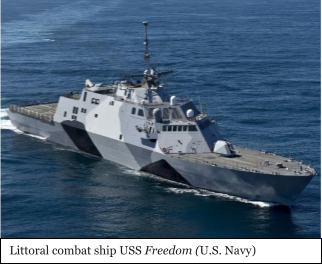
CENTCOM’s own spokesman has confirmed that Iran has mined the strait “though not extensively.” That hedging matters: the number is manageable, but the exact locations of every device are not yet fully known. Until they are, even the Omani coast route carries residual risk.
TRAFFIC, PREMIUMS, AND THE SQUEEZE ON ENERGY MARKETS
As now is widely known, the strait handles roughly 20 percent of the world’s oil supply on a typical day. That flow has been curtailed severely since the conflict began, contributing to a significant spike in global energy prices. Even as some vessels are getting through, ship-tracking data compiled by Bloomberg and other news sources shows movement remains limited, with only a handful of commercial transits per day, not the dozens that characterize normal operations.
For shipping operators, the practical implications are immediate. War risk insurance premiums for Hormuz transits have increased sharply, which means operators must weigh the premium cost against the commercial value of the cargo. Vessels that enter the zone without coordination or adequate protection face not just elevated insurance costs, but the prospect of being approached, boarded, damaged, or sunk.
A recent 10-day ceasefire between Israel and Lebanon reportedly produced a brief reopening of the strait for commercial transit. But how that ceasefire applies to the broader Hormuz situation with Iran remains genuinely uncertain. The mines and the U.S. naval blockade are separate instruments from any ceasefire; their situation has not been resolved.
THOUSANDS OF SEAFARERS STRANDED IN THE GULF
Behind the strategic and economic headlines is a human story that the maritime community cannot afford to ignore. An estimated 20,000 sailors aboard some 2,000 vessels remain trapped in the Persian Gulf, unable to transit the closed strait, unable to leave their ships, and in many cases cut off from adequate food, fresh water, pay, and contact with the outside world. The conflict that began in late February has now stretched into its fourth month with no clear end in sight, and the toll on seafarers is mounting.
Iran’s publication of a new “map” allegedly asserting its authority over the strait (and the establishment of the Persian Gulf Strait Authority to manage requests for passage) has formalized what amounts to a ransom system. Shipowners seeking to move their vessels must navigate a tangled process of payments and permissions. For crews aboard ships whose owners lack the resources or the will to engage with that system, the result is indefinite detention, at sea, in a war zone.
The International Transport Workers’ Federation (ITF) has been contacted by thousands of sailors in the Gulf since the war began, with disputes ranging from abandonment and pay delays to dangerous shortages of provisions. Some sailors report working for wages of a hundred dollars a month or less, wages that have, in some cases, gone unpaid since before the conflict began. In some instances, shipowners have conditioned repatriation on seafarers forfeiting their owed back pay. The federation’s Arab World and Iran network coordinator has described the situation as one of extreme vulnerability, noting that seafarers are simultaneously essential to global supply chains and essentially invisible to the policymakers managing the crisis.
Gulf states, particularly Saudi Arabia, have made efforts to provide humanitarian relief, facilitating resupply runs with food, fresh water, fuel, and medicines and helping some sailors transfer off their vessels. But the scale of the problem, with thousands of ships and tens of thousands of crew, dwarfs those efforts. For the majority of stranded sailors, day-to-day life consists of waiting, rationing, and uncertainty.
The legal exposure this creates for shipowners is significant and underappreciated. The duty to provide a seaworthy vessel includes an obligation to maintain adequate provisions and a safe living environment. Extended confinement in a conflict zone without food, water, or means of egress (compounded by non-payment of wages) implicates maintenance and cure obligations, potential claims of unseaworthiness, and—in the most egregious cases—possible abandonment liability.
Flag states and port state control authorities have jurisdiction to investigate and act, but enforcement in a war zone is often complicated. When these sailors eventually make it to shore, or when their cases reach courts and arbitral tribunals, the path to legal reckoning for operators who failed them may be unclear.
THE LEGAL DIMENSION FOR MARITIME WORKERS AND OPERATORS
When a vessel enters a war zone, the legal landscape shifts in ways that catch many operators and crew members off guard. The ordinary framework of maritime personal injury law—maintenance and cure, the Jones Act, general maritime law—remains in place, but it is overlaid by war risk provisions, collective bargaining agreement terms, and a set of questions that have real teeth.
Was the crew adequately warned of a known danger before the vessel entered the zone? Were they ordered into harm’s way without sufficient information or the ability to refuse? Did the operator obtain proper war risk coverage, and is that coverage structured to protect the crew’s interests as well as the vessel? If a seaman is injured or killed in or near a mine detonation, a drone strike, or a fast-boat encounter, the resulting claims can look very different from a routine personal injury matter.
Flag state requirements, port state control implications for AIS deactivation, and the legal status of vessels operating under U.S. military “coordination” (without formal escort status) all continue to remain live issues all without clean answers yet.
WATCHING THE WATER
The current approach—quiet coordination, Omani coast routing, AIS-off transits, over-the-horizon Navy coverage—is not a permanent solution. It is a temporary measure, and an operationally demanding one. The U.S. military is expending significant assets to enable each transit, and Iran knows ships are getting through. The ceasefire dynamic is volatile, while an unknown number of mines remain in the Strait.
The longer-term resolution will likely require either a diplomatic settlement that addresses mine clearance and freedom of navigation, or a military clearance operation that identifies and neutralizes every device in the strait. Until then, the Strait of Hormuz may be open (barely) for those willing to run dark, and trust that the helicopters will show up.
We at the Herd Law Firm are proud to fight for seamen, maritime workers and passengers in all types of personal injury and death claims. As maritime personal injury attorneys (and sailors ourselves!) located in northwest Houston, we never waver in our commitment to help these maritime workers, passengers, and their families when they are injured or mistreated.
SOURCES
Bloomberg / Insurance Journal – “US Forces Help Ships Leave Hormuz With Quiet Version of Project Freedom” (June 3, 2026). insurancejournal.com
Stars and Stripes – “US military helps commercial ships transit Strait of Hormuz” (June 2, 2026). stripes.com
CBS News – “To avoid risk of mines, Navy directs ships on path farther from Iran in Strait of Hormuz” (May 2026). cbsnews.com
Seatrade Maritime – “Oman warns of mines sighted in Strait of Hormuz” (June 2026). seatrade-maritime.com
Reuters – “Iran has laid about a dozen mines in Strait of Hormuz, sources say” (March 11, 2026).
Navy Times – “Pentagon assures safe passage through Strait of Hormuz despite presence of mines” (May 5, 2026). navytimes.com
U.S. MARAD – Maritime Advisory 2026-004: Persian Gulf, Strait of Hormuz, and Gulf of Oman. maritime.dot.gov
MIT/CSIS – Caitlin Talmadge, “The Hormuz Minefield,” Foreign Affairs (March 13, 2026).
Wikipedia – 2026 Strait of Hormuz Crisis. en.wikipedia.org (for background chronology)
Reuters – “Iran’s Continued Control of Hormuz Intensifies Seafarer Misery” (May 22, 2026).
International Transport Workers’ Federation – statements and reporting via Reuters, May 2026.
Saudi Ports Authority – comments by President Suliman Almazroua, via Reuters, May 2026.
The information in this post is for general informational purposes only and does not constitute legal advice. For questions specific to your maritime law issue, please contact us at 713-955-3699 or at Charles.Herd@HerdLawFirm.com.