
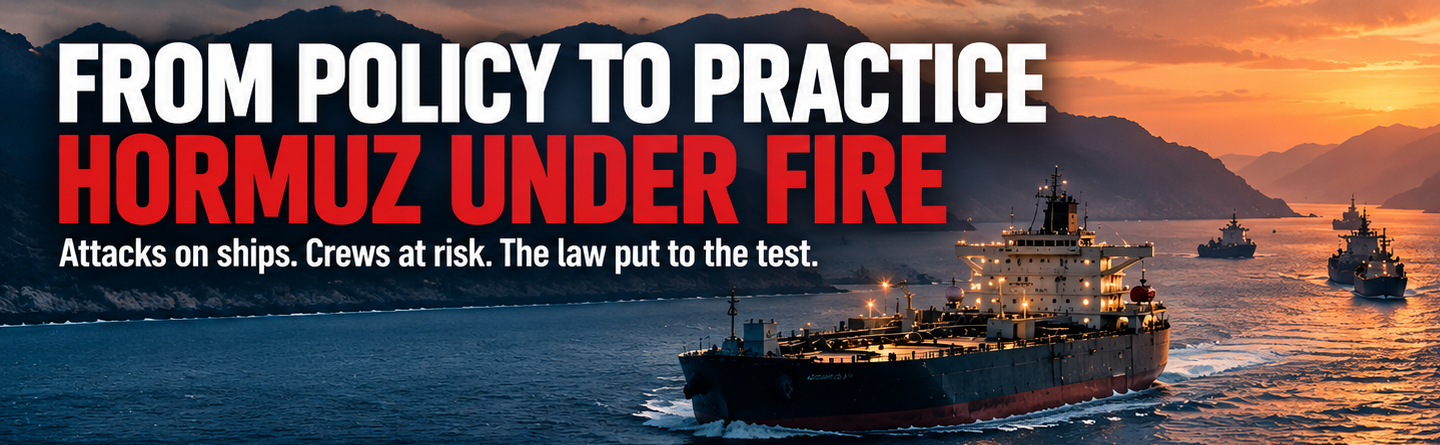
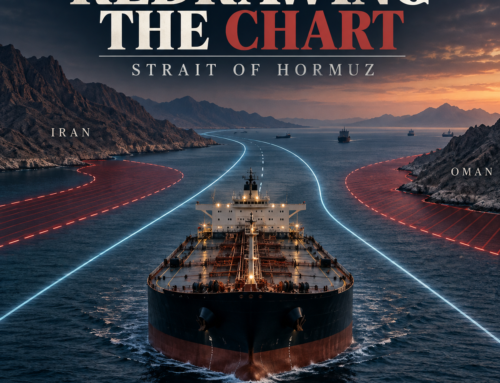
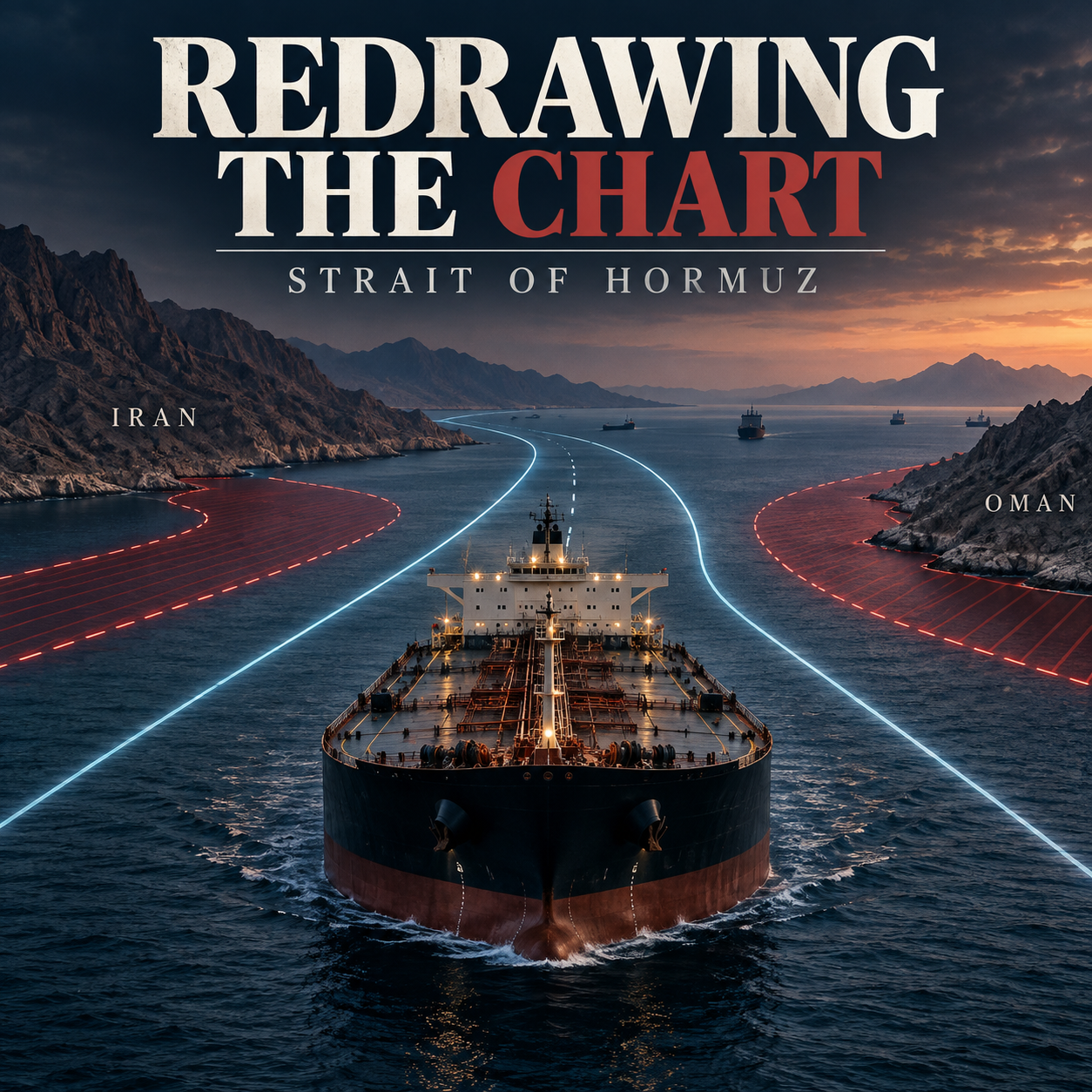
A tanker with 19 crew aboard was struck off Oman this week, the latest in a run of attacks on merchant ships in the Strait of Hormuz. Through it all, the oil keeps moving, carried by crews running without lights or radio for hazard pay. Their experience tests what the law owes the people sent into the strait.
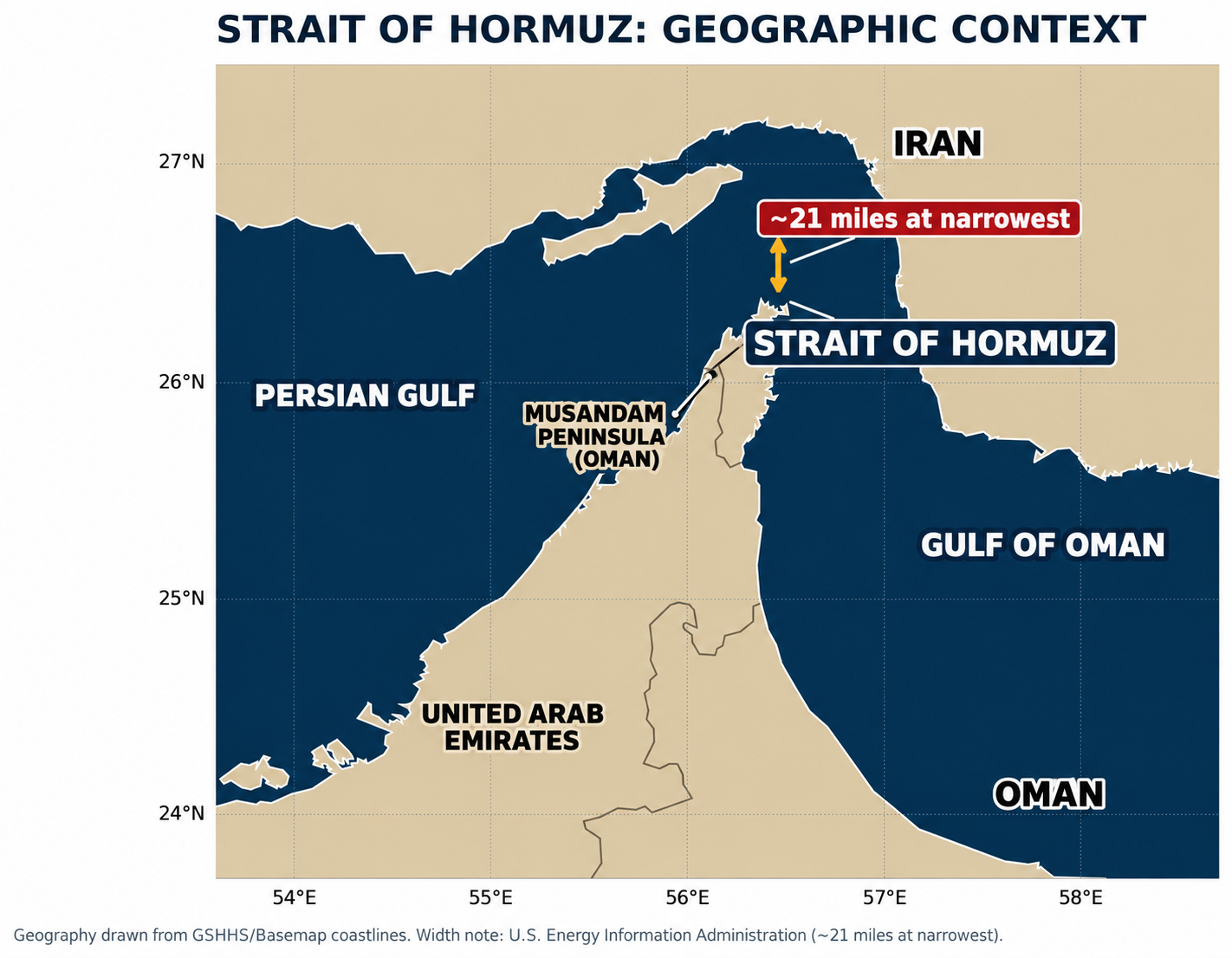
The Strait of Hormuz is only about twenty miles wide at its narrowest, close enough that no ship transiting it is ever far from danger. This week, that was proven true once again, when the Panama-flagged Aframax tanker M/T On Peace was struck by an unknown projectile off the coast of Oman, injuring at least 12 of her 19 crew. Seventeen of those aboard were Indian nationals, and India’s Ministry of External Affairs (MEA) reports the injured were evacuated to Khasab, Oman, for treatment. India did not say who fired. The strike appears connected to a United Kingdom Maritime Trade Operations (UKMTO) warning that an unidentified tanker was hit by a projectile on October 5, starting an engine-room fire, though the link has not been formally confirmed.
At least five merchant ships were hit in the strait between October 3 and October 6, among them the liquefied natural gas (LNG) carrier M/T Maran Gas Mystras, the liquefied petroleum gas (LPG) carrier M/T Vela Gas, and two very large crude carriers (VLCCs), M/T Cameroon Prosperity and M/T Ghana Prosperity. A Kuwaiti tanker caught fire after a strike on October 1, which itself followed hits on four tankers in a single 24-hour span at the end of September. In the same stretch, Iran’s Islamic Revolutionary Guard Corps (IRGC) ordered an inbound tanker to turn around or face attack.
The M/T On Peace also appears on a blacklist of 81 vessels kept by Iran’s Persian Gulf Strait Authority (PGSA), the body we first examined in Tehran’s Toll Booth, which threatens listed ships with fines, detention, or confiscation.
The View from the Bridge
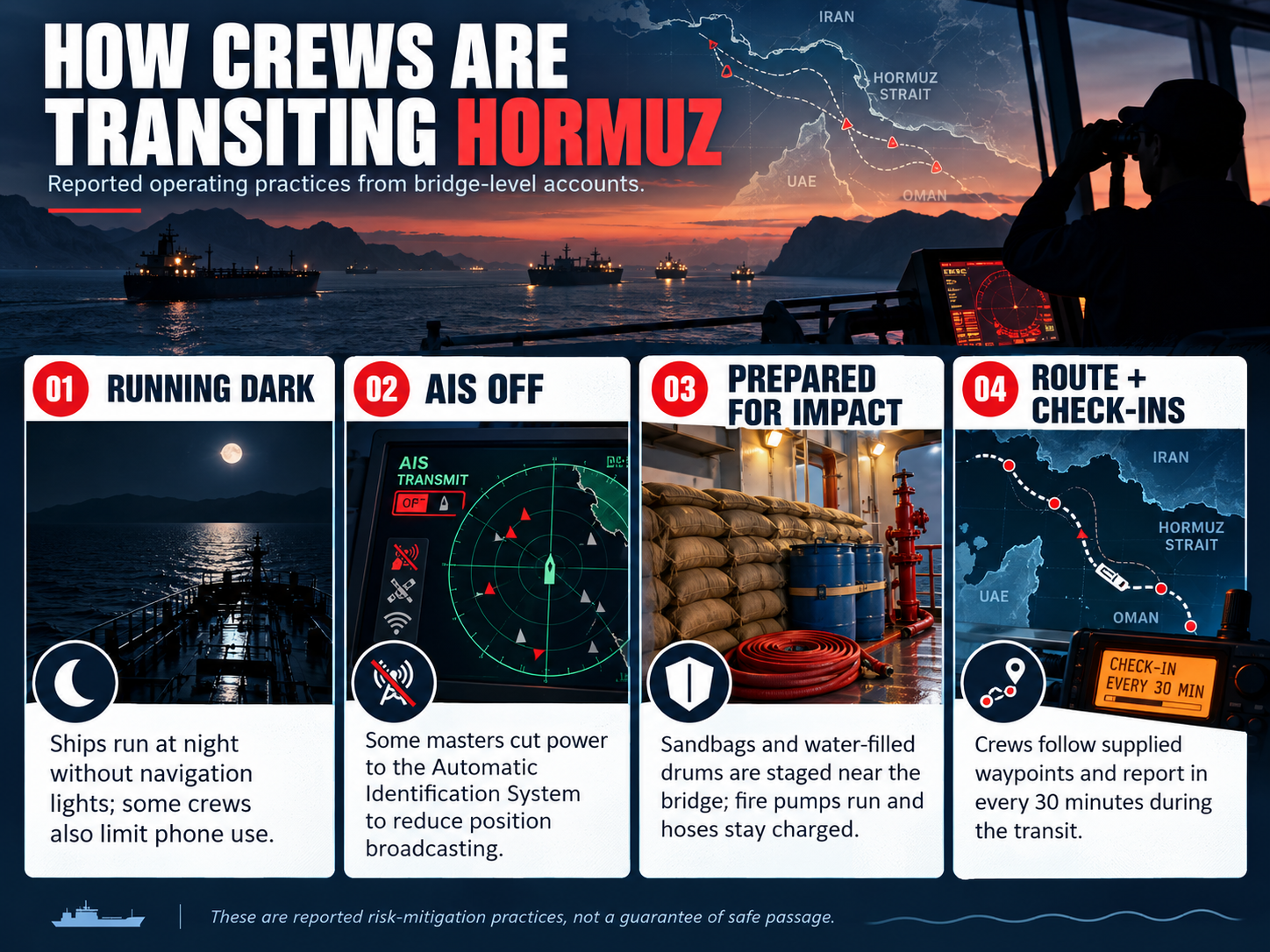
What these crossings demand of the people aboard came into focus this month in a Bloomberg interview with a Filipino tanker captain, speaking anonymously, who had just finished a three-month contract shuttling crude through the strait. By his account:
- Ships run at night with no navigation lights, no phones, and a single radar. Another master, aboard an LNG carrier, described cutting power to the Automatic Identification System (AIS) transponder to mask the ship’s position.
- Crews navigate by the Omani coastline and its lighthouses, sometimes about a mile offshore. The captain credited the “old school” piloting he learned early in his career.
- Sandbags and water-filled drums are stacked near the bridge, the emergency fire pump runs for the entire transit, and hoses stay charged near the accommodation.
- The U.S. Navy supplies the route and waypoints, and ships report in every 30 minutes. When a vessel ahead of him was hit, he steered around the fire and was told to press on.
The pay reflects the danger. The captain earned a multiple of his usual salary, and Bloomberg previously reported one owner offering crews an extra six months’ wages to make the run. Shipping executives put the odds of being hit on a crossing at roughly one in twenty. His own ship was attacked once, without damage or injury. His family, he said, is frightened; he is proud of the work and ready to go back.
Even Escorted Ships Are Being Hit
U.S. Central Command (CENTCOM) says American forces have helped thousands of ships through the strait, and crude flows from the Gulf are climbing back toward prewar levels. Protection, however, is not immunity. On September 14, an Iranian cruise missile struck a vessel operating in the strait with eight U.S. Marines aboard, part of a battalion landing team. The Pentagon did not announce it; NBC News did, two weeks later, citing three U.S. officials. The Marines suffered smoke inhalation and possible traumatic brain injuries (TBI), and all returned to duty. The vessel was not a Navy ship, and officials declined to name it.
The Joint Maritime Information Center (JMIC) continues to rate the threat in the strait SEVERE, calling deliberate hostile action highly likely.
What the IMO Promised
The contrast with the official rhetoric is stark. Days before the Marines story broke, the International Maritime Organization (IMO) marked World Maritime Day under a two-year theme, “From Policy to Practice”, with IMO Secretary-General Arsenio Dominguez declared that seafarers come first. United Nations (UN) Secretary-General António Guterres warned that conflicts are infringing navigational rights and threatening seafarers’ lives, and the IMO’s own audits found many nations still struggle to turn its rules into enforceable national law.
Dominguez has had to repeat himself throughout the year. In March, after the first strikes near Hormuz, Dominguez stated there was no justification for attacks on civilian shipping and called the plight of some 20,000 seafarers stranded inside the Persian Gulf “unacceptable and unsustainable.”
By June, the IMO had confirmed 46 attacks around the strait and 14 seafarers killed, three of them aboard the tanker M/T Settebello, as covered in “A Rough Profession,” Not an Unprotected One.
By September, the count stood at 80 verified attacks and at least 22 seafarers dead, and his message to member states had become direct and dire: “Do not use these conflicts to attack innocent seafarers.”
Nor is the toll confined to the Gulf. On September 29, five crew members were killed during the rescue of the hijacked oil tanker M/T Honour 25 in Somali waters, one of three pirated ships, along with M/T Eureka and M/T Seamull (previously reported as M/T Sibu 1), whose release freed 44 seafarers.
“It is troubling to have to make these statements so often,” Dominguez said. “Seafarers should not have to lose their lives for the service they provide for the world.”
Two Uniforms, Two Systems of Law
The law treats a Marine and a merchant mariner very differently. Under Feres v. United States (1950), active-duty service members generally cannot sue the government for injuries incident to service; instead, their care runs through military and veterans’ benefit systems. Conversely, a civilian seaman aboard a merchant vessel sent into the same water stands on entirely different ground.
That difference matters most for injuries like the ones NBC described. A concussion from a nearby blast can look minor on day one; the memory lapses, headaches, and sleepless nights that follow weeks later are easy to dismiss as stress. Consequently, any mariner aboard a vessel struck or near-missed in the Gulf should be evaluated promptly and keep every record.
Sent into the Strait
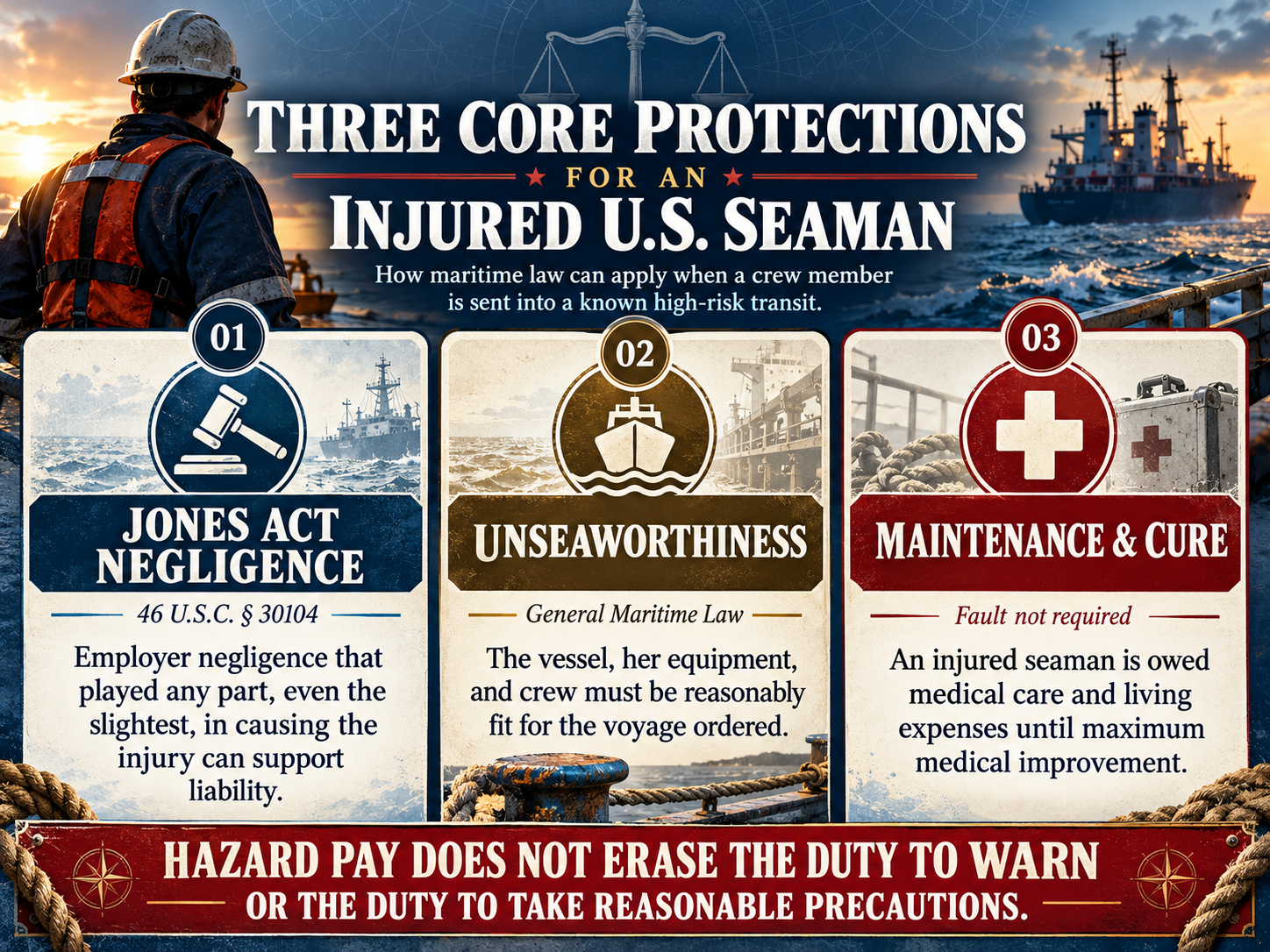
As we explained in Sent into the Strait and Running Dark Through Hormuz, the decision to sail rests formally with the master, but the pressure to sail comes from the owner, the charterer, and, in Hormuz, sometimes a naval escort telling a ship to keep going past a burning hull. A U.S. seaman carries three principal protections into that water:
- Jones Act negligence (46 U.S.C. § 30104). An employer whose negligence played any part, even the slightest, in an injury may be liable. Sending a crew through a SEVERE-rated strait without current threat intelligence, protective measures, and clear protocols invites exactly that inquiry.
- Unseaworthiness. Under the General Maritime Law, an owner is strictly liable if the vessel, her equipment, or her crew are not reasonably fit for the voyage ordered. Sandbags and running fire pumps show the minimum of what crews themselves believe that voyage requires.
- Maintenance and cure. Regardless of fault, an injured seaman is owed living expenses and medical care until maximum medical improvement (MMI), including for brain injuries that surface slowly.
Employers also owe a duty to warn of known dangers, and a hazard bonus does not discharge it. Extra wages compensate a crew for accepting risk; they do not license an owner to understate that risk or skip reasonable precautions. A one-in-twenty chance of being hit is a fact every crewmember deserves to hear plainly before signing on.
Why This Reaches the U.S. Gulf Coast
Houston-based crews, U.S. Gulf Coast operators, and the tankermen who rotate through the Persian Gulf all work inside the supply chain now running dark past Oman. When ships are hit in Hormuz, the injuries, the medical bills, and the families often come home to the U.S. Gulf Coast, along with the question of who will be responsible for them. Translating from policy to practice is not only a job for governments; it is the work a maritime lawyer does every day, one injured seaman at a time.
Maritime Trivia Question!
Q: Before satellites, a navigator out of sight of land fixed his position by “dead reckoning.” What is it, and why “dead”?
A: “Dead reckoning” works out a ship’s position from her last known fix, her heading, her speed, and the time elapsed since last measurement. Speed was once measured with the log line, a knotted rope paid out astern and counted against a sandglass, which is where the “knot” comes from.
The explanation for “dead” is less definite. A popular explanation holds that it comes from “ded.,” an abbreviation for “deduced” in old logbooks, but no such abbreviation has turned up in the historical record, and the phrase appears in print as “dead reckoning” as early as the seventeenth century. The more likely explanation is “dead” as in absolute, as in “dead ahead” or “dead calm”: reckoning by fixed numbers alone, with nothing outside the ship to check against.
With transponders off and screens dark, the tanker captains crossing Hormuz are leaning on exactly the old-school craft their predecessors relied on!
We at the Herd Law Firm are proud to fight for seamen, maritime workers, and passengers in all types of personal injury and death claims. As maritime personal injury attorneys (and sailors ourselves!) located in northwest Houston, we never waver in our commitment to help these maritime workers, passengers, and their families when they are injured or mistreated.
The information in this post is for general informational purposes only and does not constitute legal advice. For questions specific to your maritime law issue, please contact us at 713-955-3699 or at Charles.Herd@HerdLawFirm.com.
Sources
- “At Least 12 Seafarers Injured in Hormuz Tanker Attack.” Seatrade Maritime News, October 6, 2026. https://seatrade-maritime.com/security/at-least-12-seafarers-injured-in-hormuz-tanker-attack
- “India Calls for ‘Immediate Cessation of Attacks’ After Strike on Commercial Vessel in Strait of Hormuz.” The Tribune (ANI), October 6, 2026. https://tribuneindia.com/news/commercial-vessel/india-calls-for-immediate-cessation-of-attacks-after-strike-on-commercial-vessel-in-strait-of-hormuz-injures-11-of-17-nationals
- “Tanker Catches Fire After First Hormuz Attack in October.” Seatrade Maritime News, October 2, 2026. https://www.seatrade-maritime.com/security/tanker-catches-fire-after-first-hormuz-attack-in-october
- Longley, Alex. “No Lights, No Radio: Getting Oil Through Hormuz Is a Risky Job.” Bloomberg (via gCaptain), October 2, 2026. https://gcaptain.com/no-lights-no-radio-getting-oil-through-hormuz-is-a-risky-job/
- Schuler, Mike. “NBC News: Eight Marines Injured in Previously Undisclosed Iranian Attack in Hormuz.” gCaptain, September 28, 2026 (reporting NBC News). https://www.nbcnews.com/politics/national-security/us-marines-injured-recent-iranian-attack-rcna600097
- Joint Maritime Information Center. “JMIC Advisory Note,” Update 100, September 27, 2026. UKMTO. https://www.ukmto.org/-/media/ukmto/products/update-100-jmic-advisory-note-27-september.pdf
- Schuler, Mike. “World Maritime Day 2026: IMO Warns Shipping Rules Are Under Strain as Seafarers Face Deadly Attacks.” gCaptain, September 24, 2026. https://gcaptain.com/world-maritime-day-2026-imo-warns-shipping-rules-are-under-strain-as-seafarers-face-deadly-attacks/
- Guterres, António. “Message on World Maritime Day, 24 September 2026.” United Nations / International Maritime Organization. https://wwwcdn.imo.org/localresources/en/MediaCentre/Documents/UNSG%20WMD%202026/%5bENGLISH%5d%20UN%20SGM%20on%20World%20Maritime%20Day%2024%20September%202026.pdf
- “Legal and Operational Issues in the Strait of Hormuz: Transit Passage Under Fire.” Just Security, 2026. https://www.justsecurity.org/133996/legal-operational-strait-hormuz-transit-passage/
- Legal Information Institute, Cornell Law School. “46 U.S. Code § 30104 – Personal injury to or death of seamen” (the Jones Act). https://www.law.cornell.edu/uscode/text/46/30104
- Feres v. United States, 340 U.S. 135 (1950). Justia. https://supreme.justia.com/cases/federal/us/340/135/
- Schuler, Mike. “IMO Chief Decries Rising Toll on Seafarers Caught in Conflict.” gCaptain, October 6, 2026. https://gcaptain.com/imo-chief-decries-rising-toll-on-seafarers-caught-in-conflict/
- Schuler, Mike. “A Dozen Seafarers Injured in Strait of Hormuz Tanker Attack, India Says.” gCaptain, October 6, 2026. https://gcaptain.com/a-dozen-seafarers-injured-in-strait-of-hormuz-tanker-attack-india-says/
- “IMO Secretary-General Mourns Seafarers Killed During Rescue of Hijacked Ship.” American Journal of Transportation (IMO release), 2026. https://www.ajot.com/news/imo-secretary-general-mourns-seafarers-killed-during-rescue-of-hijacked-ship
- “Indian Among 5 Seafarers Killed by Somali Pirates Months After Hijack of Oil Tanker ‘Honour 25’.” The Week, October 1, 2026. https://www.theweek.in/news/maritime/2026/10/01/indian-among-5-seafarers-killed-by-somali-pirates-months-after-hijack-of-oil-tanker-honour-25.html
- Herd Law Firm, PLLC. “‘A Rough Profession,’ Not an Unprotected One: The Duty to Warn and Maritime Law.” https://herdlawfirm.com/firm-update/a-rough-profession-not-an-unprotected-one-the-duty-to-warn-and-maritime-law/
- Herd Law Firm, PLLC. “Tehran’s Toll Booth: What the Persian Gulf Strait Authority Means for Shipping.” https://herdlawfirm.com/firm-update/tehrans-toll-booth-what-the-persian-gulf-strait-authority-means-for-shipping/
- Herd Law Firm, PLLC. “Running Dark Through Hormuz: The Quiet Campaign to Keep Shipping Moving.” https://herdlawfirm.com/firm-update/running-dark-through-hormuz-the-quiet-campaign-to-keep-shipping-moving/
- Herd Law Firm, PLLC. “Sent into the Strait.” [URL to confirm] https://herdlawfirm.com/firm-update/



Leave A Comment