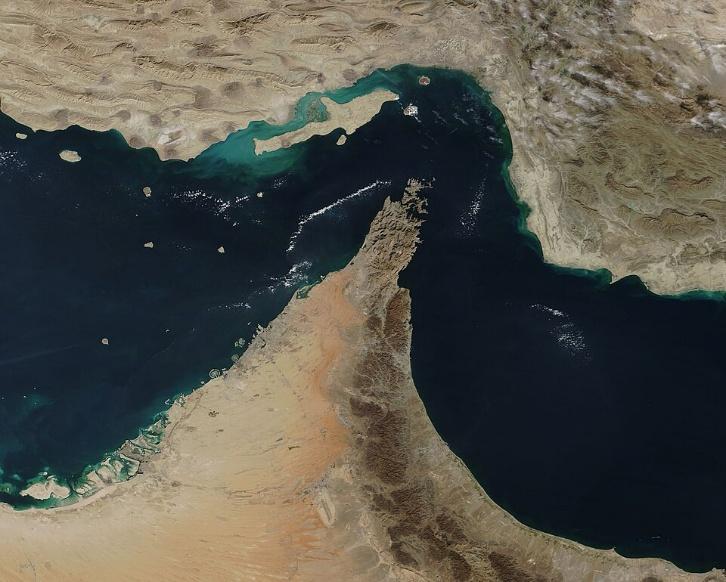
The world’s most consequential waterway just got a lot more complicated. Here’s what shipowners, operators, and traders need to understand — right now.
I was reading my desk in Houston yesterday morning, when the latest U.K. Maritime Trade Operations security advisory landed in my inbox. The short version: a major shipping corridor just got a lot more complicated overnight — and if your business touches that part of the world, you need to know about it.
As of yesterday afternoon, at 1400 UTC on April 13, 2026, the United States has officially activated a maritime blockade around Iran. That means U.S. military forces are now actively controlling all vessels and cargo coming and going from Iranian ports, oil terminals, and coastal waters — covering the Arabian Gulf, the Gulf of Oman, the Strait of Hormuz, and surrounding seas.
IS THE STRAIT OF HORMUZ CLOSED?
No, but it’s complicated. The Strait of Hormuz is the narrow waterway that roughly 20% of the world’s oil passes through every day. The U.K. Maritime Trade Operations (UKMTO) — the gold standard for real-time maritime security advisories — confirmed that access restrictions are now in force across Iranian ports, oil terminals, and coastal areas. Critically, these restrictions apply without distinction to vessels of any flag, meaning it doesn’t matter where your ship is registered. If you’re engaging with Iranian ports or coastal infrastructure, you are in the blockade enforcement zone.
The U.S. and UKMTO have maintained that ships simply passing through — not stopping at Iranian ports — are still allowed to transit. But “allowed” doesn’t mean “smooth sailing.” Any ship in the area can now expect to be hailed by military vessels, asked to identify itself, and possibly boarded for inspection.
Think of it like a sobriety checkpoint on a highway. The road is technically open, but every driver should expect to slow down and answer some questions.
Ships already docked in Iranian ports have reportedly been given a short grace period to leave. Details on that window, including routing guidance and official authorization procedures, are still being worked out, so the situation is fluid.
HAS THE U.S. DONE THIS BEFORE?
Washington has already demonstrated exactly how it intends to enforce blockade operations — in the Caribbean. Since late 2025, U.S. forces have boarded and seized at least seven tankers linked to Venezuelan crude exports, executing high-seas boardings, long-range pursuits, and vessel captures under sanctions-enforcement authority. That operational playbook is now being picked up and carried to Hormuz.
WHAT ABOUT THE MILITARY THREAT IN THE WATER?
Even setting aside the blockade itself, the region was already dangerous. There are ongoing concerns about sea mines near traditional shipping routes and military activity near key islands in the strait. Iran has long relied on small, fast patrol boats as a way to threaten ships in tight waterways — those capabilities are still active considerations, despite what official statements may claim.
ACTION CHECKLIST: OWNERS AND OPERATORS, WHAT SHOULD YOU DO RIGHT NOW?
- Call your insurer. War risk insurance for this region may now be required or may have changed. Don’t assume your existing policy covers the new situation.
- Check your contracts. If you have a charter party or cargo contract involving this region, there are clauses — like “safe port” warranties and force majeure — that directly affect who bears the risk if a vessel is detained or rerouted.
- Brief your crews. Ship officers need to know how to respond calmly and correctly when a military vessel makes contact. The wrong response can escalate a routine inspection.
- Watch for official updates. Formal Notices to Mariners will provide routing guidance as it develops. Monitor these daily.
The bottom line: the strait is open, but it no longer operates the way it did last week. The rules changed fast, and the consequences of getting it wrong — a seized vessel, a stranded cargo, a gap in insurance coverage — are serious. So, be aware, be smart, and be prepared.
We at the Herd Law Firm are proud to fight for seamen, maritime workers and passengers in all types of personal injury and death claims. As maritime personal injury attorneys (and sailors ourselves!) located in northwest Houston, we never waver in our commitment to help these maritime workers, passengers, and their families when they are injured or mistreated.
Sources: National Aeronautics and Space Administration GSFC, UKMTO https://www.ukmto.org/ukmto-products/advisories/2026
4/15/2026
This article is for general information only and is not legal advice. For questions specific to your maritime law issue, please contact our office at 713-955-3699 or Charles.Herd@HerdLawFirm.com.