The largest U.S. maritime legal recovery in history — and what every maritime professional should understand about how we got here.
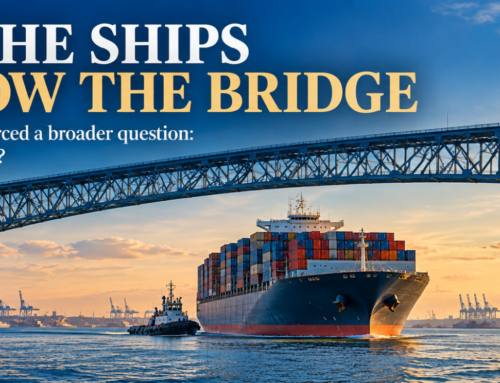
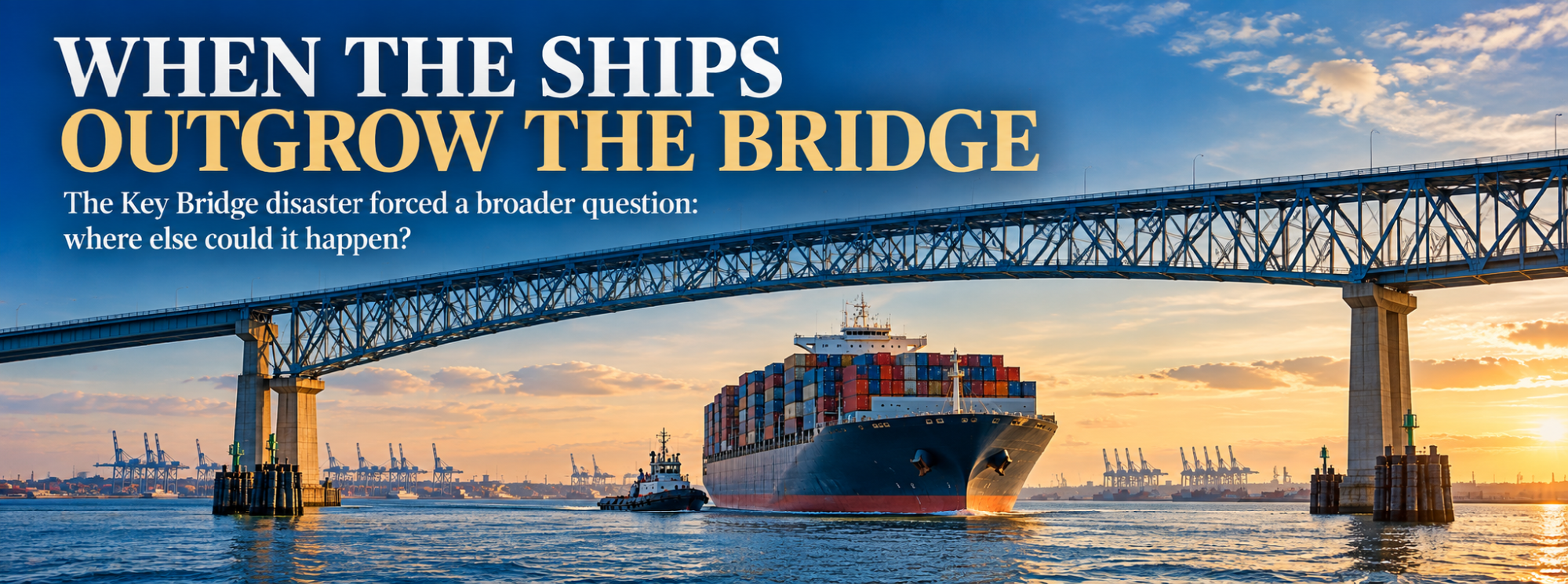
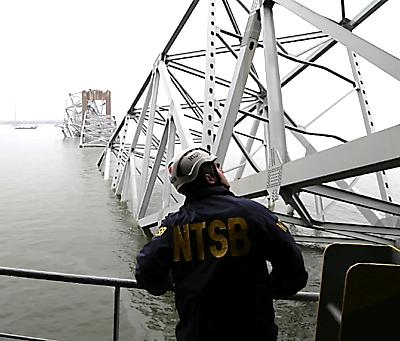
On March 26, 2024, the containership M/V Dali struck Baltimore’s Francis Scott Key Bridge, killing six construction workers causing the total collapse of the bridge and shutting the Port of Baltimore for weeks. This week, the State of Maryland has settled its claims against the vessel’s Singapore-based owner and operator for $2.25 billion — the largest U.S maritime legal recovery in history.
Maryland Attorney General Anthony G. Brown said the settlement resolves civil claims brought against the vessel interests on behalf of the state and its agencies, including the Maryland Transportation Authority (MDTA), the Maryland Port Administration (MPA), and the Maryland Department of the Environment (MDE). This covers the state’s bridge destruction, environmental harm to the Patapsco River, lost toll revenue, and other economic losses.
The settlement does NOT resolve the state’s ongoing claims against the shipbuilder, Hyundai Heavy Industries, which the National Transportation Safety Bureau (NTSB) found at fault for the M/V Dali’s loss of power, plus pending freight.
For anyone who works on the water, it’s worth understanding how that settlement number was reached.
The 1851 Liability Cap — and How Maryland Blew Past It
Grace Ocean and Synergy Marine, the owners and operators of the vessel, sought to cap their exposure at roughly $43.7 million under the Limitation of Liability Act of 1851, which is a Civil War-era statute conditionally allowing shipowners to limit liability to a vessel’s post-casualty value. As expected, Maryland refused to accept that proposal, since total economic damages from the disaster exceeded $5 billion; the bridge replacement alone is projected at $4.3–$5.2 billion, with completion around 2030. The $2.25 billion settlement, reached just three weeks before trial, came in at more than fifty times the cap that was sought.
What the Criminal Charges Allege
Meanwhile, federal prosecutors this week unsealed criminal charges against Synergy Marine, related entities, and technical superintendent Mr. Radhakrishnan Karthik Nair. The NTSB earlier identified a loose signal wire as the initiating cause of the M/V Dali‘s first blackout. The indictment goes further: it further alleges that automatic fuel supply pumps (designed to restart engines after a blackout) were replaced with a non-redundant flushing pump that could not restart the fuel supply. This meant when the ship lost power the first time, it lost the ability to recover power indefinitely. Meanwhile, shipbuilder HD Hyundai Heavy Industries separately alleges these modifications happened after construction. If true, what looked like a tragic accident becomes the foreseeable consequence of deliberate safety shortcuts.
The Fight Isn’t Over
Maryland’s settlement resolves the State’s claims, but it is far from the end of this litigation. A federal trial is still scheduled to begin June 1, with Baltimore City, Baltimore County, victims’ families, and dozens of other plaintiffs continuing to press their own claims. Baltimore Mayor Brandon Scott has made clear the city intends to “continue aggressively pursuing all available remedies to recover the full extent of damages caused by the collapse.” Baltimore City Attorney Ebony Thompson put it more pointedly: Baltimore taxpayers, she said, should not bear the cost of what she characterized as knowing misconduct and concealment by the vessel’s operators.
The families of the six workers killed in the collapse have not settled either. Attorney L. Chris Stewart, who represents four of those families and the lone survivor, confirmed this week that no resolution has been reached for his clients. “We look forward to the day that the families will be treated correctly,” he recently stated.
Whether the June 1 trial proceeds on schedule is itself uncertain. Legal observers have noted that the newly filed criminal charges could complicate or delay the civil proceedings, as civil cases may be delayed by the court while parallel criminal matters are resolved. Jose Anderson, a litigation professor at the University of Baltimore School of Law, has suggested the criminal indictment may actually increase pressure on Grace Ocean and Synergy Marine to settle remaining claims quickly, noting that a prolonged, high-visibility case could affect their ability to do business globally.
Additionally, a second legal front is opening against shipbuilder Hyundai Heavy Industries. The Maryland Attorney General’s Office has confirmed it intends to pursue claims against Hyundai for its alleged negligence contributing to the M/V Dali’s electrical failures, as the NTSB’s 2025 report pointed to those failures as a significant contributing cause of the disaster. A filing date has not yet been announced.
What This Means for Maritime Workers
A few practical points for anyone who works or spends time on the water: in the case of any incident, ALL safety management decisions (including which systems get maintained, which redundancies get bypassed) become legal evidence, not just operational details. If your employer or vessel operator is cutting corners, document it. if you are ever injured at sea, the Jones Act and U.S. general maritime law provide vital protections, but they require experienced counsel. Maritime claims are technically complex; the window for action can be shorter than you expect.
The bigger picture of this settlement is one the industry needs to hear: a $2.25 billion outcome is a signal to every shipowner, operator, and flag state that the safety systems aboard every vessel should carry legal significance. When they fail because of neglect, someone will be held responsible.
We at the Herd Law Firm are proud to fight for seamen, maritime workers and passengers in all types of personal injury and death claims. As maritime personal injury attorneys (and sailors ourselves!) located in northwest Houston, we never waver in our commitment to help these maritime workers, passengers, and their families when they are injured or mistreated.
Sources
- GCaptain / Mike Schuler, “Record $2.25 Billion Settlement Reached in Baltimore Key Bridge Collapse Case” (May 13, 2026)
- National Transportation Safety Board — Key Bridge collapse investigation findings
- U.S. Department of Justice — Criminal indictment of Synergy Marine and Radhakrishnan Karthik Nair (May 2026)
- HD Hyundai Heavy Industries — Allegations regarding post-delivery modifications to the Dali
- Limitation of Liability Act of 1851, 46 U.S.C. §§ 30501 et seq.
- Maryland Attorney General’s Office / Kelley Drye / Liskow & Lewis — Settlement statements (April–May 2026)
The information in this post is for general informational purposes only and does not constitute legal advice. For questions specific to your maritime law issue, please contact us at 713-955-3699 or at Charles.Herd@HerdLawFirm.com.