
When PFAS Victims Win: Inside the $10.3 Billion 3M Settlement That’s Changing Environmental Law
If your drinking water has been contaminated with PFAS chemicals, June 22, 2023, marked a turning point in your fight for justice. On that date, 3M Corporation—one of the world’s largest manufacturers of “forever chemicals”—agreed to pay $10.3 billion to compensate communities nationwide for PFAS water contamination. This landmark settlement represents one of the largest environmental payouts in U.S. history and could provide crucial compensation for your community’s water treatment costs.
But what does this massive settlement actually mean for you? Who qualifies? When will payments arrive? And what other legal developments should you watch for? Here’s everything you need to know about this groundbreaking victory and how it fits into the broader PFAS litigation landscape.
Breaking Down the $10.3 Billion Victory
The numbers alone tell a powerful story of corporate accountability. 3M’s $10.3 billion settlement dwarfs most environmental settlements in U.S. history, reflecting both the massive scope of PFAS contamination and the strength of the legal case against the company. This isn’t just a one-time payment—it’s structured as a comprehensive 13-year compensation program designed to address both current contamination and future monitoring needs.
Who Gets Paid? Understanding the Two-Phase Structure
3M’s settlement creates two distinct pathways for compensation, each designed to address different contamination scenarios:
Phase One: Immediate Relief for Currently Contaminated Systems
 If your public water system had detectable PFAS contamination as of June 22, 2023, you’re automatically eligible for Phase One status. This means priority access to settlement funds and immediate relief for communities that have already discovered contamination. Phase One class members represent thousands of water systems across the United States that have been dealing with PFAS contamination costs for years.
These communities can claim compensation for:
- Past PFAS testing and detection expenses
- Installation costs for advanced water treatment systems
- Ongoing operational expenses for treatment equipment
- Regular monitoring and compliance testing
- Administrative costs associated with PFAS management
Phase Two: Protection for Future Discoveries
Even if your water system hasn’t detected PFAS yet, you may still be covered. Phase Two includes all public water systems that will be required to test for PFAS under current or future regulations. If you later discover PFAS contamination in your water source, you can file a claim as a Phase Two member.
Beyond 3M: The PFAS Litigation Landscape
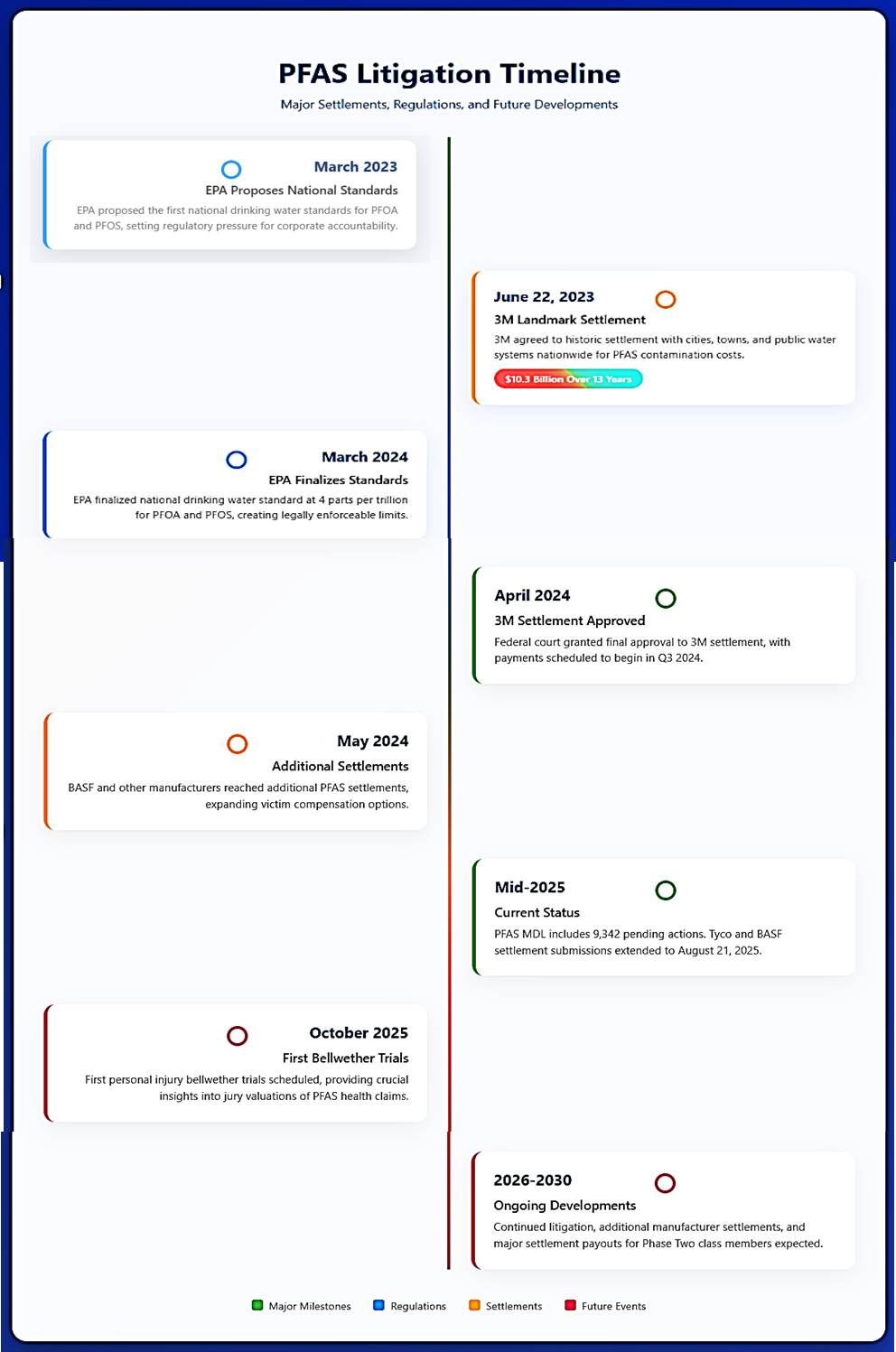
While 3M’s settlement represents the largest single victory for PFAS victims, it’s just one piece of a much larger legal battle. The PFAS multidistrict litigation (MDL) has become one of the most significant environmental cases in U.S. history, with 9,342 pending actions as of May 2025.
Other Major Settlement Victories
DuPont’s $1.2 Billion Contribution DuPont, another major PFAS manufacturer, contributed an additional $1.2 billion to the settlement pool. Combined with 3M’s contribution, these settlements total approximately $14.75 billion—a staggering sum that reflects the enormous scope of PFAS contamination across the United States.
Additional Manufacturers Join Settlement BASF and other chemical manufacturers have reached their own PFAS-related settlements, with submission deadlines for participation extended to August 21, 2025. This extension gives more communities time to join these recovery programs and seek compensation.
Regulatory Pressure Drives Corporate Accountability
The massive settlement amounts didn’t happen in a vacuum. Regulatory pressure from the Environmental Protection Agency has been crucial in forcing corporate accountability:
March 2023: EPA proposed the first national drinking water standards for PFOA and PFOS, two of the most studied PFAS chemicals.
March 2024: EPA finalized these standards, setting legally enforceable limits of 4 parts per trillion (ppt) for PFOA and PFOS—among the strictest drinking water standards ever established.
These regulatory developments have dramatically increased the pressure on both water utilities and chemical manufacturers, strengthening the legal foundation for ongoing cases and future settlements.
What’s Next?
October 2025: The First Personal Injury Trials
While the 3M settlement addresses water system costs, thousands of individuals are pursuing personal injury claims for health conditions allegedly caused by PFAS exposure. The first bellwether trials for these personal injury cases are scheduled for October 2025.
These test cases will provide crucial insights into how juries value PFAS-related health claims and may influence settlement negotiations for thousands of pending individual cases. Legal experts estimate potential individual settlement payouts ranging from $75,000 to $500,000 per person, though these figures remain speculative and will vary significantly based on the strength of each case.
Understanding Why “Forever Chemicals” Matter
Per- and polyfluoroalkyl substances (PFAS) have earned the nickname “forever chemicals” because they don’t break down naturally in the environment or human body. Used in industry and consumer products since the 1940s, PFAS have contaminated water supplies nationwide and have been linked to serious health conditions including:
- Multiple types of cancer
- Liver damage and disease
- Decreased fertility and pregnancy complications
- Increased risk of high cholesterol
- Immune system suppression
- Growth and developmental delays in children
The widespread nature of PFAS contamination—combined with mounting scientific evidence of health risks—has created the perfect storm for massive litigation against the companies that manufactured and used these chemicals for decades.
Time is critical in PFAS litigation. Statutes of limitations vary by state and claim type, making prompt action essential. Whether you’re part of a contaminated community or an individual with potential PFAS-related health issues, here’s what you should do:
What Are Your Legal Rights?
If your water has tested positive for PFAS contamination and you or your family have been harmed, you may have grounds for a legal claim.
Who Could Be Held Liable?
- Chemical manufacturers (such as 3M and DuPont)
- Government Entities that failed to regulate appropriately
- Industrial facilities or local municipalities that failed to notify residents or treat the water supply
What Can You Seek in a Lawsuit?
- Medical expenses and future health care
- Loss of income if illness affects your ability to work
- Pain and suffering
How PFAS Lawsuits Work
- Initial Evaluation – A legal team (such as the experienced team here at the Herd Law Firm, PLLC) will assess your exposure history, test results, and health symptoms.
- File a Claim – A competent and knowledgeable lawyer can help you file your claims documents in a timely manner.
- Discovery – Your lawyer also can assist you in gathering evidence, including medical documentation and expert testimony.
- Settlement or Trial – Some PFAS lawsuits with many claimants are resulting in multi-million, even multi-billion-dollar settlements, including recent ones with 3M and DuPont.
Don’t Wait – Know the Time Limits
PFAS cases are subject to statutes of limitations, which vary by state. In many cases, the clock starts when you first learn of the contamination or the harm it caused. That’s why it’s crucial to act quickly.
Need Help?
If you think PFAS contamination has affected your or a loved one’s health, consider speaking with a knowledgeable legal professional such as the team here at the Herd Law Firm, PLLC about PFAS-related claims. If you have any questions, call us here at 713-955-3699 or email us at Charles.Herd@herdlawfirm.com to discuss your options!
8/15/25
Check out these Resources & Links:
- EPA PFAS Portal: https://www.epa.gov/pfas
- UCMR 5 Water System Contamination Map: https://epa.maps.arcgis.com
- EWG U.S. PFAS Contamination Sites Interactive Map: Interactive Map: PFAS Contamination Crisis: New Data Show 9,323 Sites in 50 States
- AFFF MDL Docket Info: https://www.jpml.uscourts.gov/mdl-2873
- Michigan Dept. of Environment, Great Lakes, and Energy: Michigan PFAS Action Response Team (MPART)